
August 12, 2026
Jud Smith
TL;DR: The right siding material depends on your budget, climate, maintenance needs, and long-term plans. Vinyl is more affordable, while fiber cement offers greater durability and weather resistance.
Fiber cement siding can last 50 years or more, while vinyl typically lasts 20 to 30 years. Cracks, loose panels, fading, and moisture damage may indicate that your siding needs attention. If it is more than 20 years old, a siding installation expert can help you decide between repair and replacement.
Your home’s siding faces constant exposure to changing weather. A hailstorm may strike one afternoon, followed by intense sun and heat the next day. Over time, these conditions can cause panels to crack, fade, warp, or pull away from the home.
When damage appears, choosing a replacement involves more than finding a color or style you like. You also need to consider durability, maintenance, cost, and how well each material performs in your local climate.
This guide:
- Compares today’s most common exterior siding materials
- Explains which options offer the greatest durability
- Outlines when it may be time to contact an expert siding installation service
In Short: The right siding depends on your climate, budget, maintenance preferences, and how long you plan to stay in the home. Vinyl offers affordability, while fiber cement generally provides stronger long-term durability.
Why Your Siding Choice Matters More Than Looks
Siding is your home’s first line of defense. It blocks wind, rain, snow, and sun.
Pick the wrong material, and problems show up fast. Cracking, fading, and water damage behind the panels are common signs of a mismatch between the material and your climate.
Your siding also affects your energy bills. A well-insulated exterior keeps warm air in during winter and out in summer. The U.S. Department of Energy recommends adding continuous exterior insulation while a home is already being resided, since it costs far less to do at that stage.
What Your Exterior Is Telling You: Warped panels, peeling paint, soft areas, rising energy bills, or stains below seams may indicate that the siding system is no longer protecting the home properly.
Compare Your Siding Material Options
Most homeowners choose between four types: vinyl, fiber cement, wood, and metal or engineered wood. Each one trades off cost, upkeep, and lifespan differently, which is why picking from the right house siding material options matters more than going with whatever’s cheapest upfront.
| Material | Typical Lifespan | Relative Cost | Maintenance | Durability in Harsh Weather | Best For |
| Vinyl | 20 to 30 years | Low | Low, occasional cleaning | Can crack in freezing temps and fade under UV | Budget-conscious homeowners |
| Fiber Cement | 50+ years | Mid to high | Low, repaint every 15+ years if pre-finished | Resists hail, wind, and fire well | Homeowners prioritizing long-term durability |
| Wood | 20 to 40 years | Mid to high | High, staining, or sealing every few years | Prone to rot and pests without upkeep | Homeowners who want a natural look and don’t mind upkeep |
| Metal | Varies by product | Mid | Low | Resists wind and fire, dents more easily in hail | Wind-prone areas with lower hail risk |
| Engineered Wood | Between vinyl and fiber cement | Mid | Moderate, sealing every 5 to 8 years | Better than raw wood, more prone to upkeep than fiber cement | Homeowners who want a wood look with less maintenance |
Vinyl Siding
Vinyl costs less than almost any other option. It installs fast and comes in a wide range of colors and styles.
The tradeoff is toughness. Vinyl can crack in freezing weather and fade under years of direct sun. Homes in areas with big temperature swings tend to see this wear sooner than expected.
Vinyl still works well for many budgets, especially with insulated backing. Our vinyl siding installation team can walk you through what to expect from it year after year.
Fiber Cement Siding
Fiber cement blends cement, sand, and cellulose fibers into planks that mimic wood, stucco, or masonry. It resists fire, pests, and moisture better than most other materials.
Manufacturers back it with 30-year warranties or longer, a strong sign of how well it holds its shape and color through rough weather.
The catch is weight and cost. Fiber cement needs precise cutting and fastening, so hire a crew with real experience. Learn more about our fiber cement siding services and what installation involves.
Wood Siding
Wood siding gives a home a warm, natural texture. Cedar, pine, and redwood are common picks, each with its own grain.
The catch is upkeep. Wood needs staining or sealing every few years to fight rot, and it draws termites and carpenter ants if left untreated.
Metal and Engineered Wood
Metal siding resists fire and pests and holds up well in high winds. It dents more easily than fiber cement, so hail-prone homes should weigh that risk.
Engineered wood uses treated fibers bonded with resin. It resists moisture and pests better than raw lumber, at a lower cost than fiber cement.
At a Glance: Each siding material offers a different balance of cost, durability, appearance, and maintenance. Use these priorities to narrow down the best fit for your home:
- Vinyl: Best for lower upfront cost and minimal upkeep
- Fiber cement: Best for long-term durability and harsh weather
- Wood: Best for a natural appearance with regular maintenance
- Metal or engineered wood: Best for strength, style, and moderate upkeep
What Makes the Most Durable Siding Material
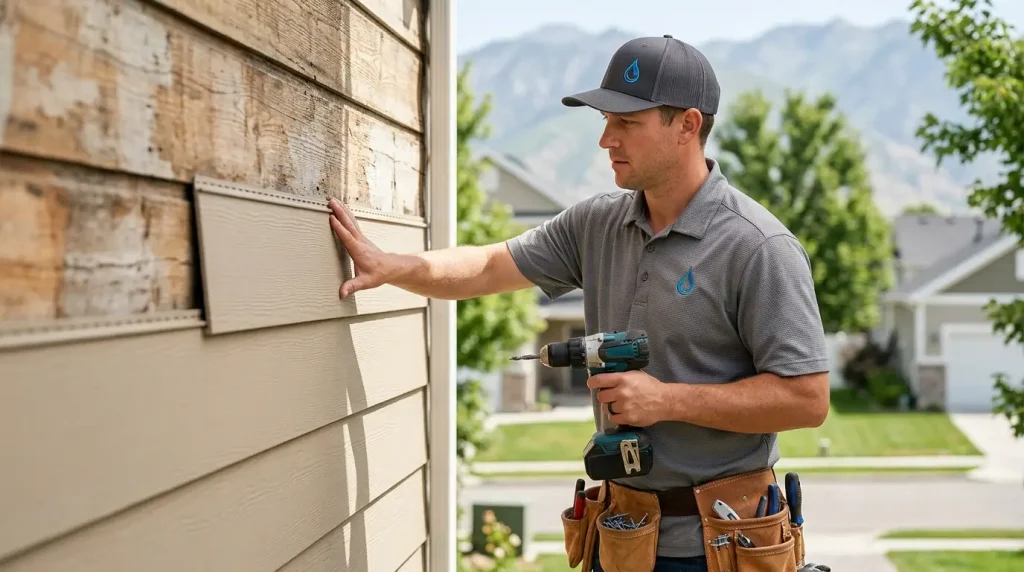
Fiber cement usually tops the list when homeowners ask about the most durable siding material. It resists hail, wind-driven debris, and minor impacts better than vinyl. It won’t warp, rot, or feed a fire the way wood can.
Metal comes close on wind and fire resistance, but it dents more easily. Wood, even with good care, still lags in pest and moisture resistance.
With correct installation and basic upkeep, fiber cement can last 50 years or longer, according to manufacturer data. That lifespan is hard to match with any other common material, and it’s a big part of why fiber cement is often ranked the best exterior siding material for homeowners planning to stay put long-term.
Long-Term View: Durability depends on more than the material itself. Correct installation, water management, flashing, ventilation, and routine maintenance all influence how long siding protects the home.
Siding Repair vs. Replacement: How to Decide
Not every problem calls for new siding, but it helps to know where the line is.
Repair is usually enough when:
- Damage is limited to a small, isolated area rather than spread across a wall
- The layer behind the siding is still dry, with no signs of moisture intrusion
- The siding is under warranty, and the issue is a covered defect
- The material is still relatively young, without widespread cracking or fading
Replacement is usually the better call when:
- Damage is spread across multiple sections rather than one or two panels
- You’re seeing recurring repairs on the same wall year after year
- There’s visible moisture damage, soft spots, or mold behind the siding
- The siding is approaching or past the end of its expected lifespan (20+ years for vinyl, for example)
A trained crew can cut out and replace damaged sections without redoing the whole wall, as long as the layer behind it stays dry. When the damage is more widespread, or the siding is aging out, complete siding solutions tend to be the more cost-effective long-term fix.
What to Look For: Isolated damage may support a targeted repair, while recurring leaks, widespread fading, soft sheathing, and problems across several walls usually point toward replacement.
What Is the Best Siding for Homes in Tough Climates?
The right material depends on your local weather. Strong sun, freeze-thaw winters, and hail put more stress on siding than a mild climate does, which is exactly why choosing the best siding material for Utah weather takes more than picking a color you like.
Fiber cement panels are installed with expansion gaps built in for temperature shifts, so they don’t buckle as they heat up or contract in the cold. That detail matters more with sharp daily swings.
Wind matters too during storm season. Fiber cement’s weight keeps panels locked in place better than lightweight vinyl, which can pull loose in high gusts. If a recent storm left your home exposed, our team offers complete siding solutions, including storm damage repair, built for storm-prone properties.
What Matters Most: The best material should match the property’s most demanding weather condition. Hail resistance may matter more in one area, while moisture control, wind resistance, or heat performance may lead the decision elsewhere.
How Do Siding Costs Compare Over the Long Term?
Vinyl costs the least upfront. Fiber cement sits in the middle, and real wood or stone veneer sits near the top of the price range.
That first number doesn’t tell the whole story, though. Fiber cement’s long lifespan and lower repainting frequency can offset its higher price within a decade or two, according to industry cost comparisons.
If you plan to stay in your home long-term, that math tends to favor fiber cement.
Think About the Long Run: A lower upfront price does not always mean lower overall cost. Siding that lasts longer and needs fewer repairs may save you more over time.
How Do You Choose the Right Siding Contractor?
Siding performs best when a trained crew installs it. Improper nailing, missing flashing, or seams without expansion room can shorten a material’s lifespan and void the warranty.
Before hiring, ask what a contractor checks during an inspection: the condition of the sheathing underneath, signs of moisture or pest damage, how the current siding was fastened, and whether the home’s flashing and trim are still doing their job. Ask any contractor about their hands-on experience with your specific material, not just siding in general.
Cutting, sealing, and fastening steps differ between vinyl, wood, and fiber cement, and finding a provider of genuine expert siding installation services makes the difference between siding that lasts and siding you’ll be repairing again in a few years.
What to Ask Before Hiring: Ask who will complete the work, whether they have experience with your siding material, how they handle flashing or hidden moisture, and what warranties apply. Clear answers help you compare contractors beyond price alone.
Your Next Steps for a Durable Home Exterior
Vinyl offers the lowest upfront cost, wood gives you a classic look with more upkeep, and fiber cement combines strength, fire resistance, and the longest lifespan of the group. If durability is your top priority, fiber cement is the most durable siding material you can choose for most climates.
Whether you’re planning a new build, a full re-side, or repairs after storm damage, matching the material to your home makes all the difference.
Ready to upgrade your home’s exterior? Contact us for a free estimate and expert consultation on the best siding materials and expert siding installation services for your Utah home.
Frequently Asked Questions
What is the most durable siding material for homes?
Fiber cement is generally the most durable siding material. It resists fire, pests, hail, and moisture better than vinyl, wood, or most metal options, and it can last 50 years or more with proper care.
How long does fiber cement siding last?
With correct installation and routine maintenance, fiber cement siding typically lasts 50 years or longer, based on manufacturer warranty data.
Is vinyl or fiber cement siding better?
Vinyl costs less upfront and installs faster, but fiber cement holds up better against fire, pests, moisture, and impact damage over time. Your climate and budget should guide the choice.
Can damaged siding be repaired instead of replaced?
Yes, in most cases. A crew can cut out and replace individual panels without redoing an entire wall, as long as the material behind the damaged section stays dry.
Does siding need repainting over time?
Factory-finished panels rarely need repainting for 15 years or longer. If you do repaint, use a 100% acrylic latex paint on a properly prepped surface for the best hold.
When should I hire expert siding installation services?
Reach out when you’re planning new construction, replacing siding that’s near or past its expected lifespan, or dealing with damage spread across more than a section or two. A quick inspection can confirm whether repair or replacement makes more sense.
What should a siding contractor inspect before replacement?
A thorough inspection covers the sheathing underneath for rot or moisture, the condition of flashing around windows and doors, how much of the existing siding is damaged, and whether the issue is isolated or spread across the home.

Need Help? Get a free assessment
Get a call back within 1 hour
(During business hours).
Recent Posts
What Siding Installation Mistakes Can Lead to Water Damage?
When Is the Best Time of Year to Replace Siding in Utah?
Modern Exterior Siding: How to Plan a Siding Upgrade That Improves Protection, Style, and Home Value
What Makes Fiber Cement Siding a Strong Option for Utah Homes?

Expert Siding Installation Services: How to Choose the Right Siding Material For Your Home
Share
Recent Posts
What Siding Installation Mistakes Can Lead to Water Damage?
September 8, 2026
TL;DR: Proper siding installation helps protect your home by controlling how water moves around the exterior wall system. Common installation mistakes involving flashing,...
When Is the Best Time of Year to Replace Siding in Utah?
September 2, 2026
TL;DR: The best time to replace siding in Utah is typically spring (April to June) and early fall (September to October) when temperatures...
Modern Exterior Siding: How to Plan a Siding Upgrade That Improves Protection, Style, and Home Value
August 25, 2026
A siding upgrade starts with understanding the damage, choosing the right material, and hiring a contractor who does the job properly. Siding isn’t...